KOMOREBI
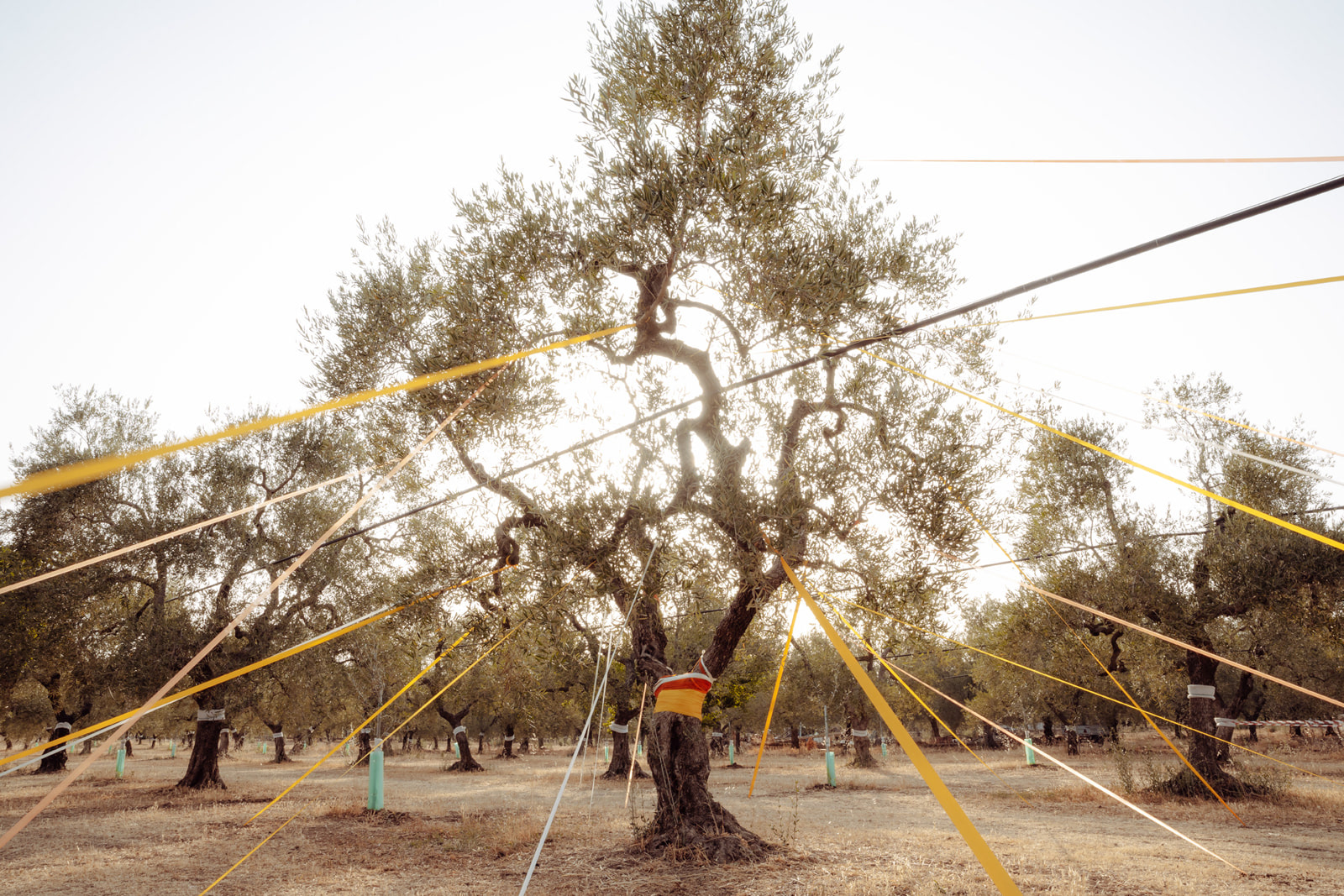
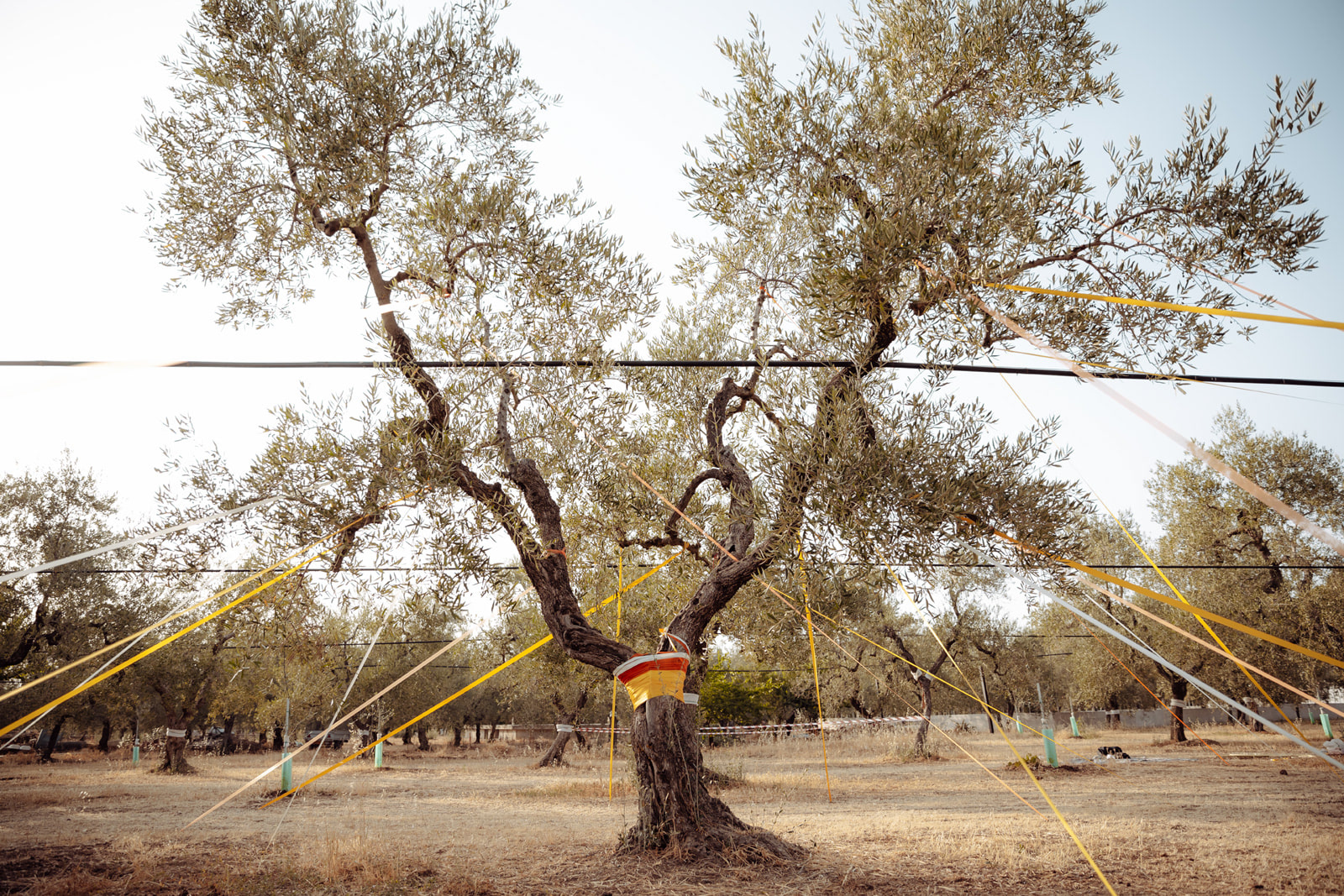
The Japanese word komorebi has a deeply poetic meaning. lt refers to the light that filters through the leaves of trees.
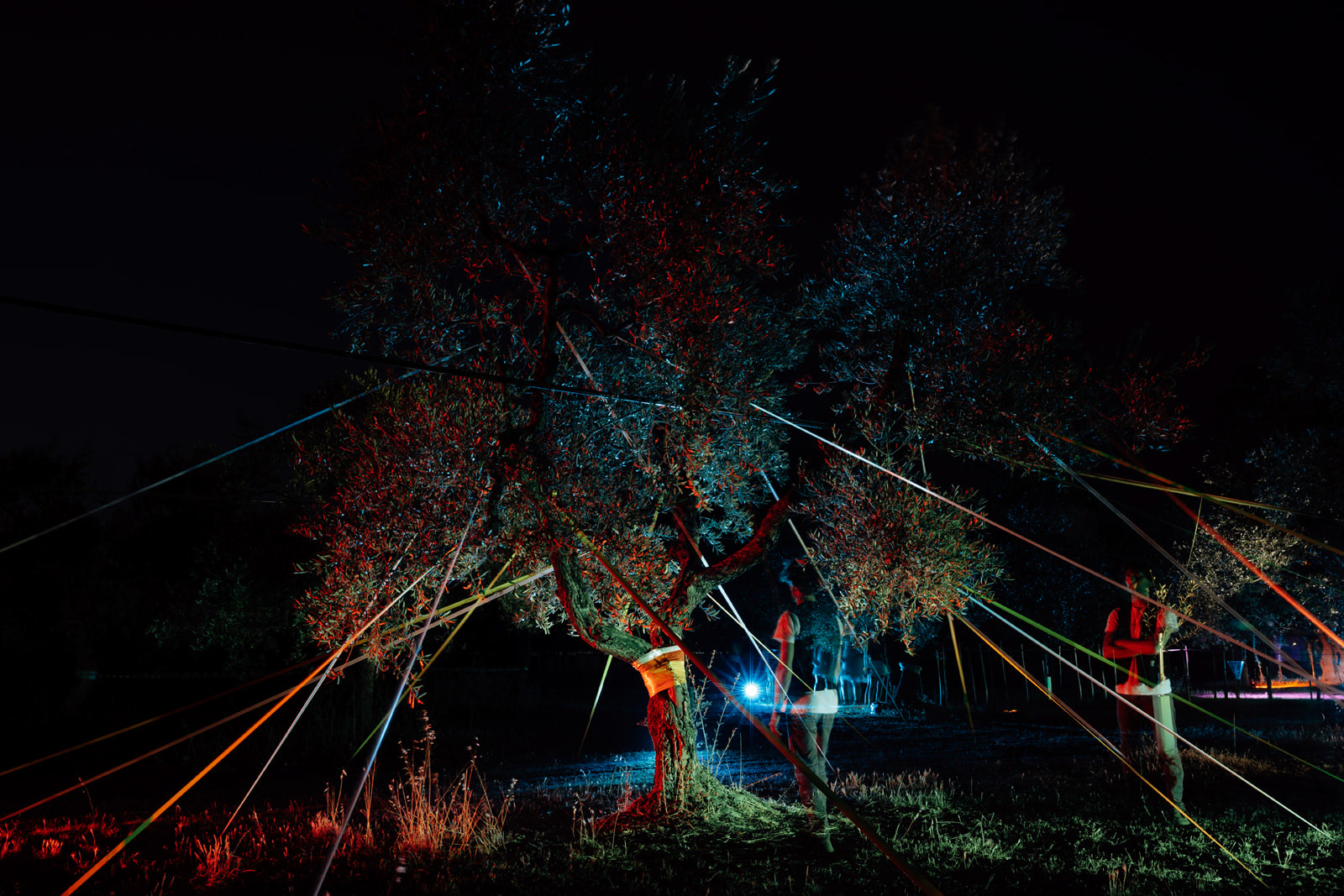
lnspired by this magical and poetic idea, I decided to create an installation that would capture its essence, connecting it to the tragedy that occurred years ago on the railway between Andria and Corato.
The installation consists of 23 beams of light, each representing one of the 23 lives lost in the train accident that took piace on July 12, 2016, in the countryside between Andria and Corato stations.
For me, this is a symbolic gesture, a form of magie that brings peace to the hearts of those who have endured profound loss, as well as to those who experienced the tragedy indirectly. This work connects the earth, where we live, to the sky, where the victims now symbolically reside.
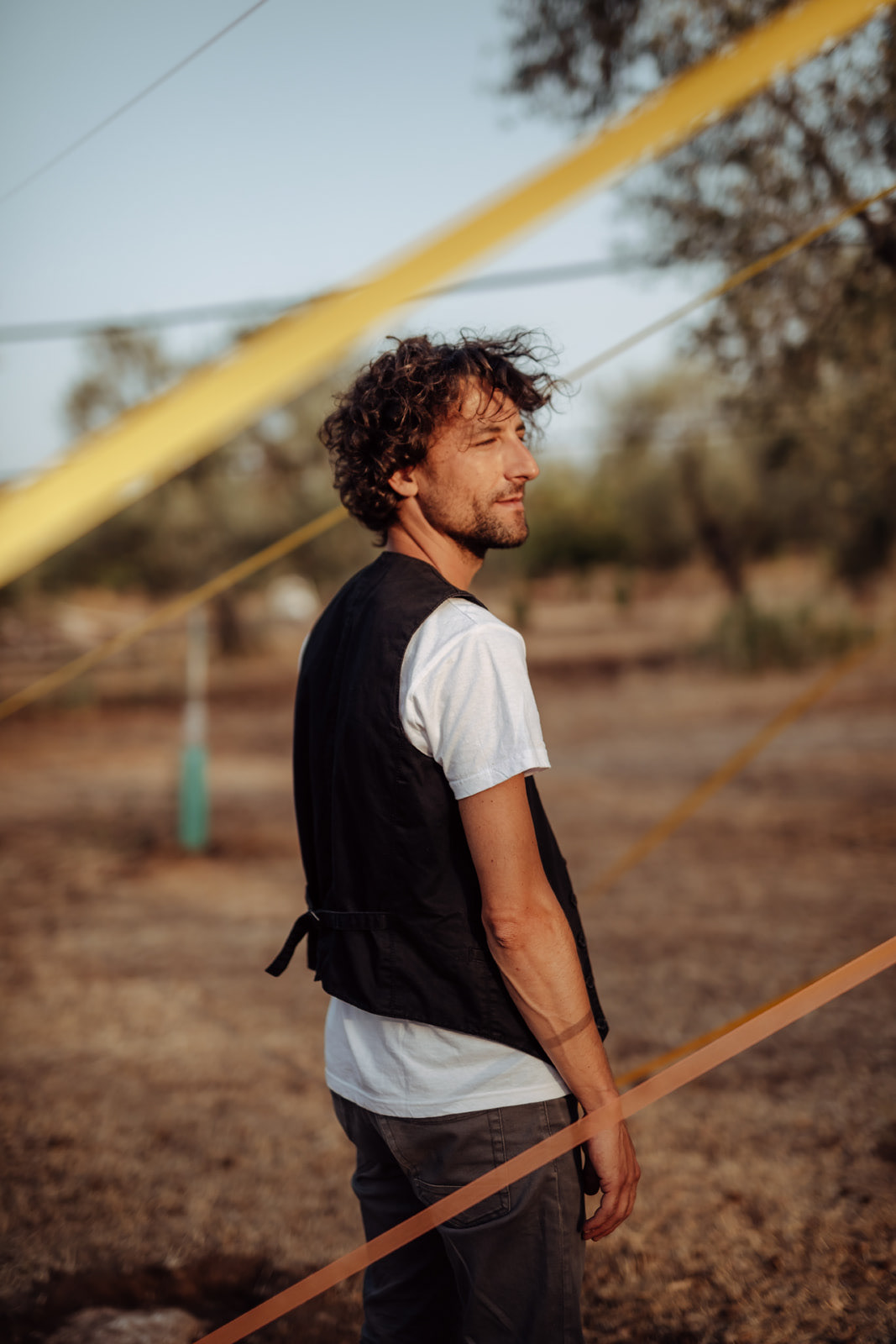
I like to think that each ray of sunlight filtering through the trees is a soul illuminating our day.



OLIVIER ÉCORCHÉ
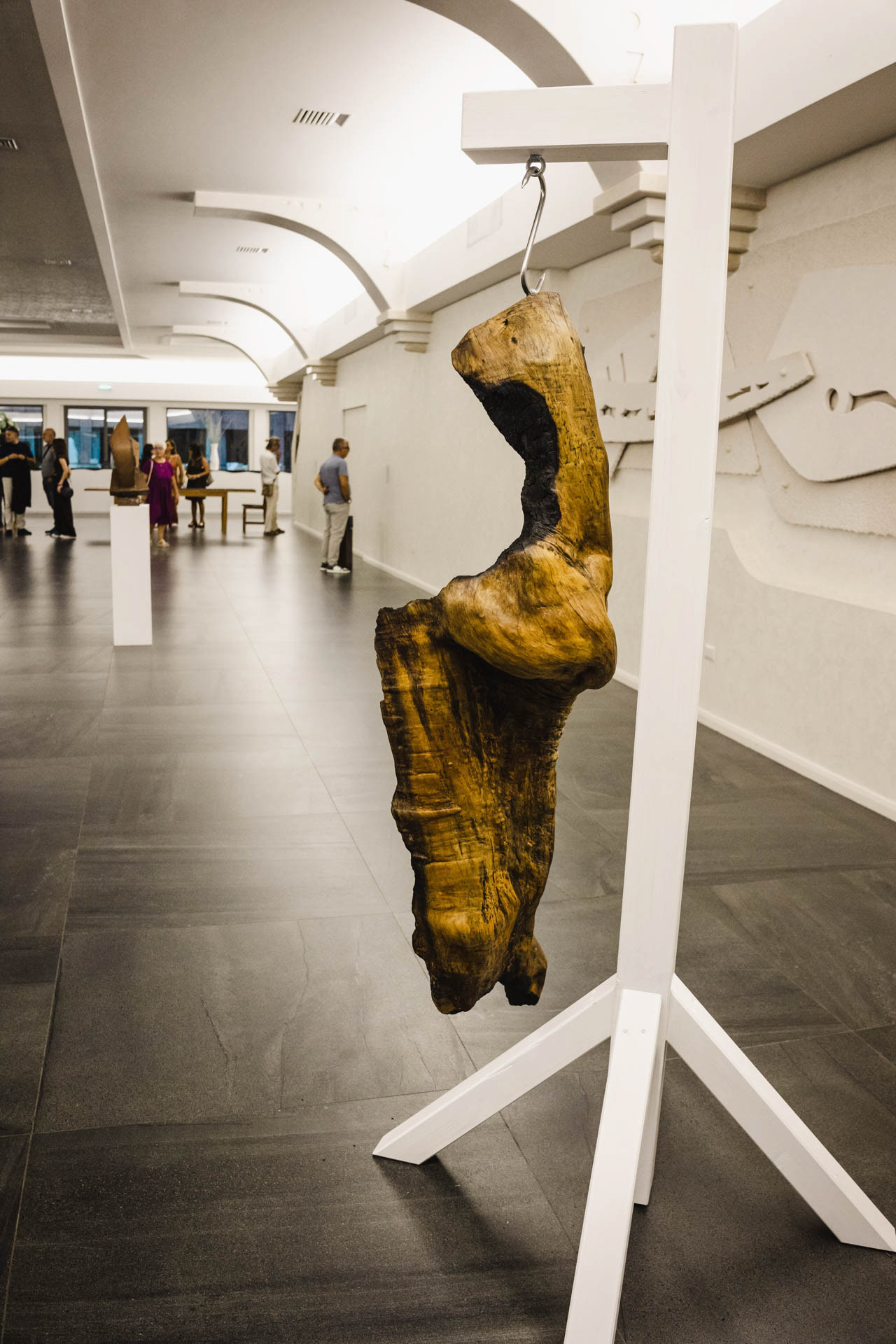
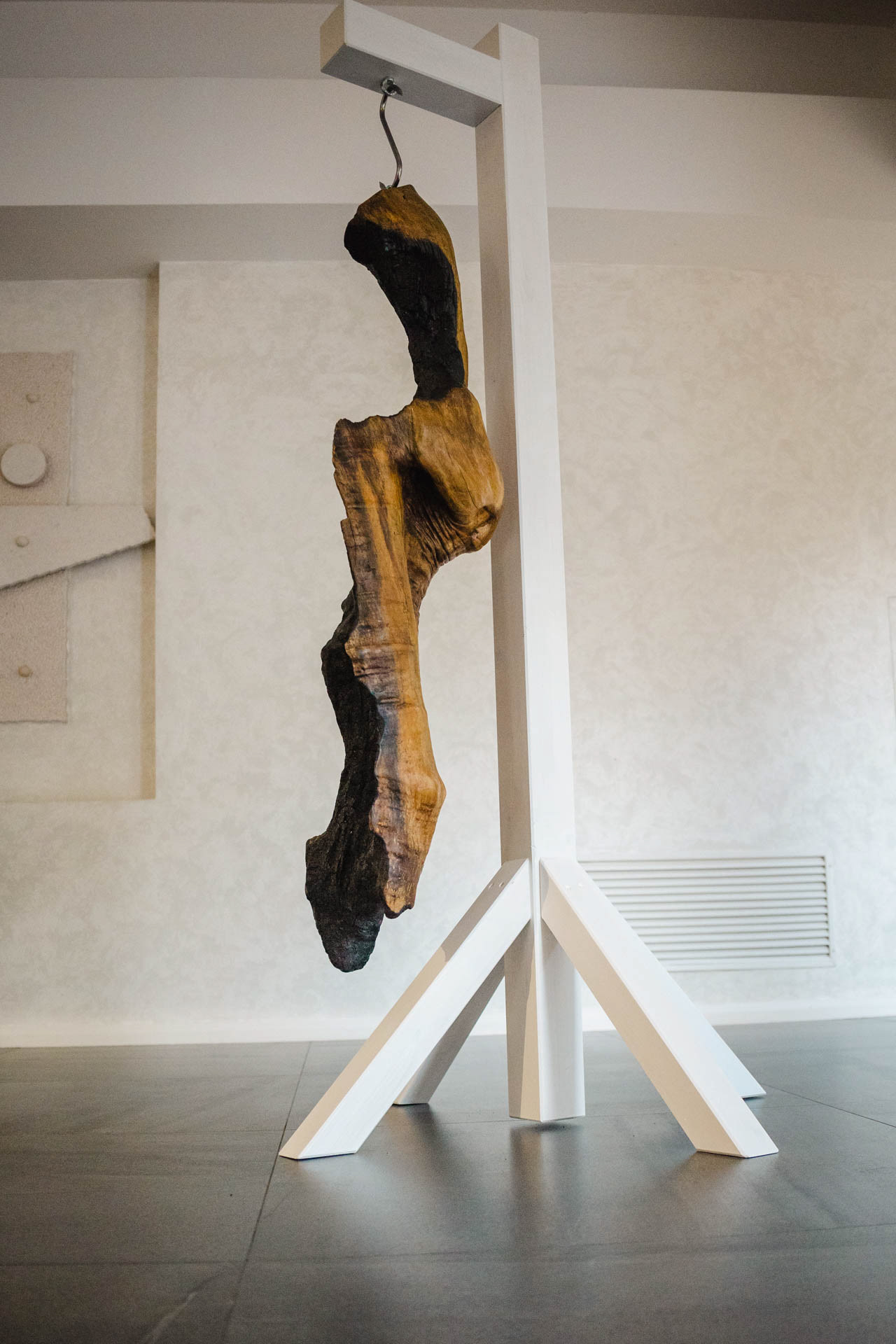
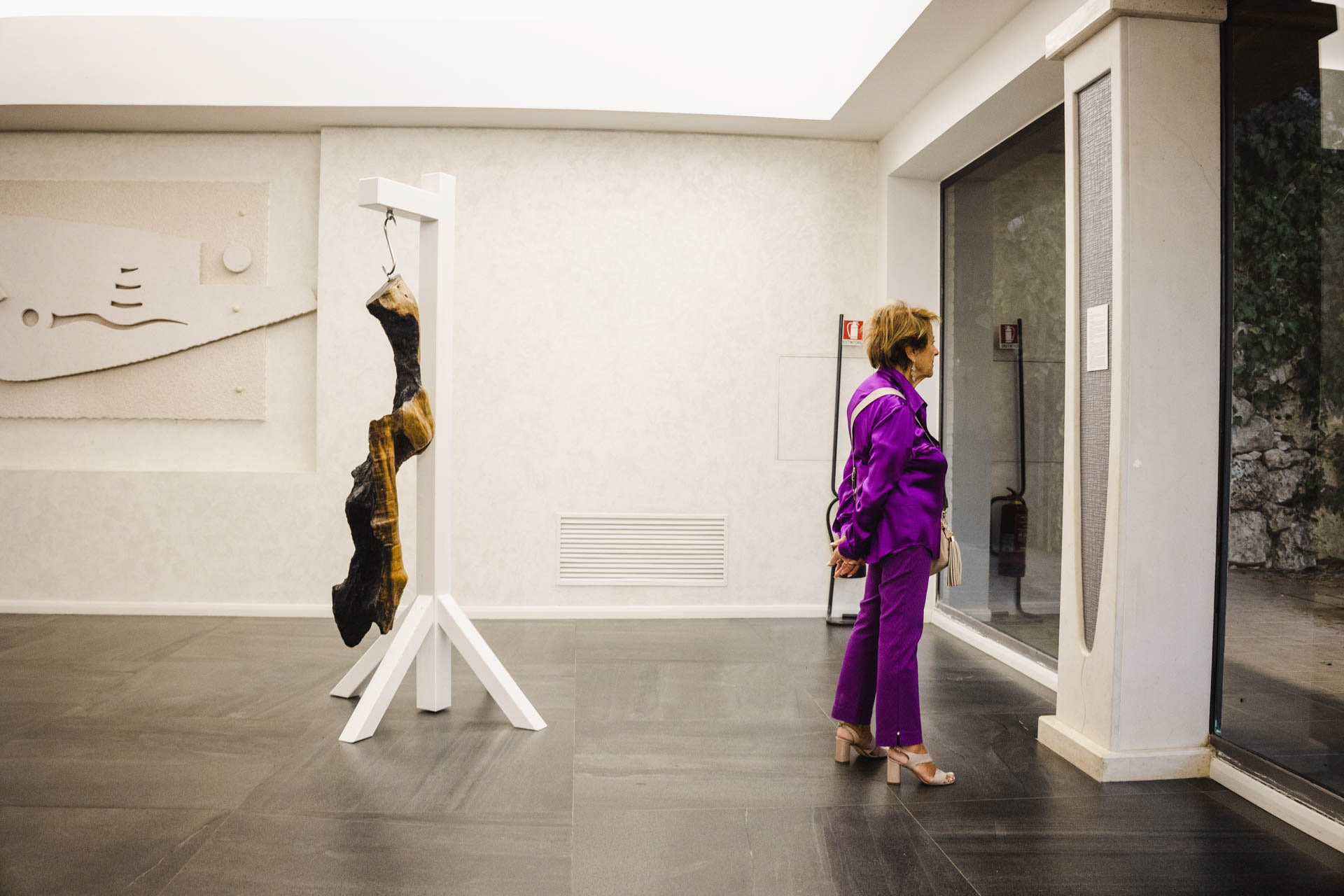
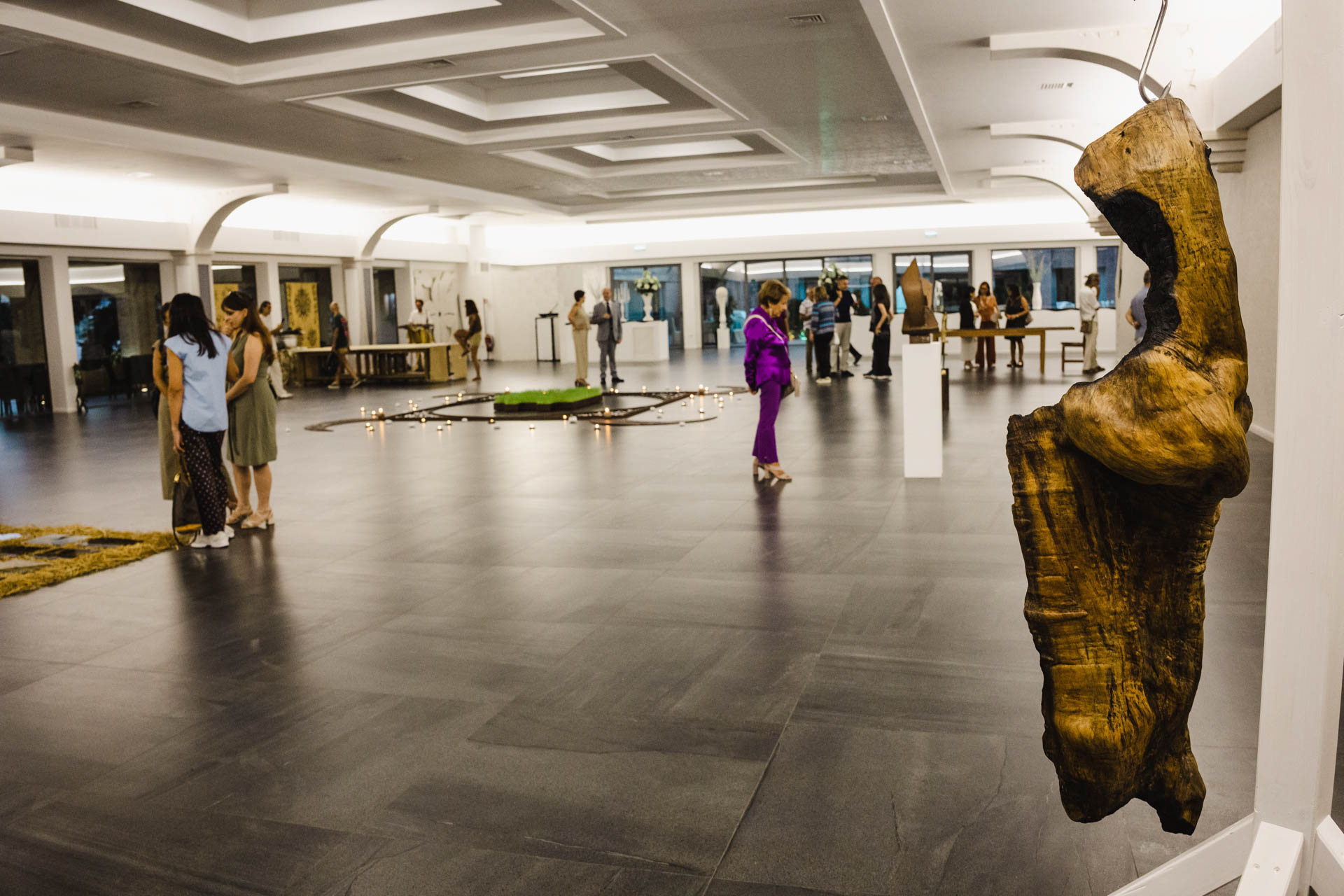
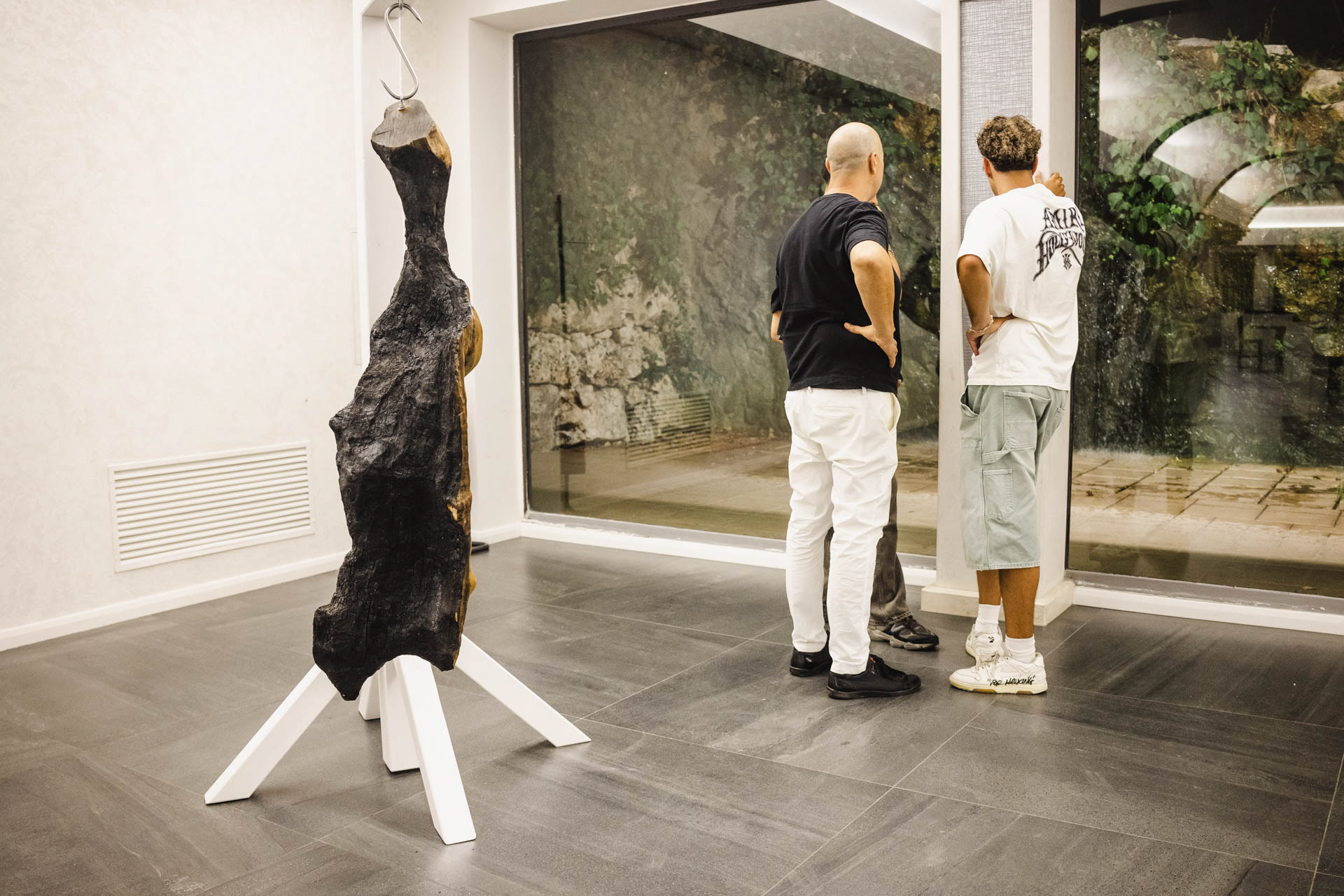
The work brings together different imaginaries belonging both to art history and to the Apulian landscape. In Puglia, the olive tree is not simply a tree. It is a living archive. Many specimens have endured centuries of history, wars, famines, fires and transformations of the agricultural landscape. Olive trees shape the territory and preserve its memory. Bringing one into an exhibition space means transferring a fragment of that landscape, but also of its history.
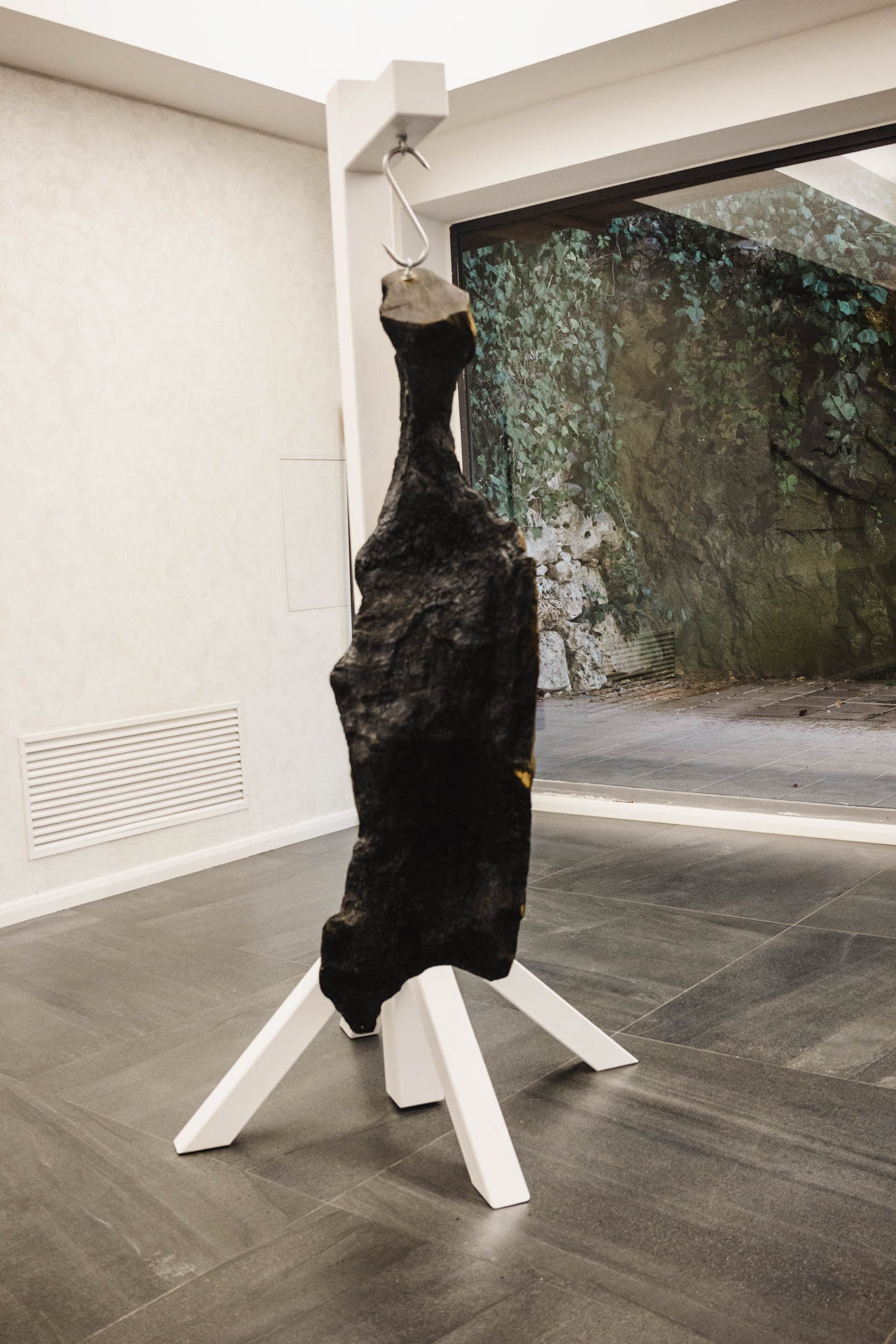
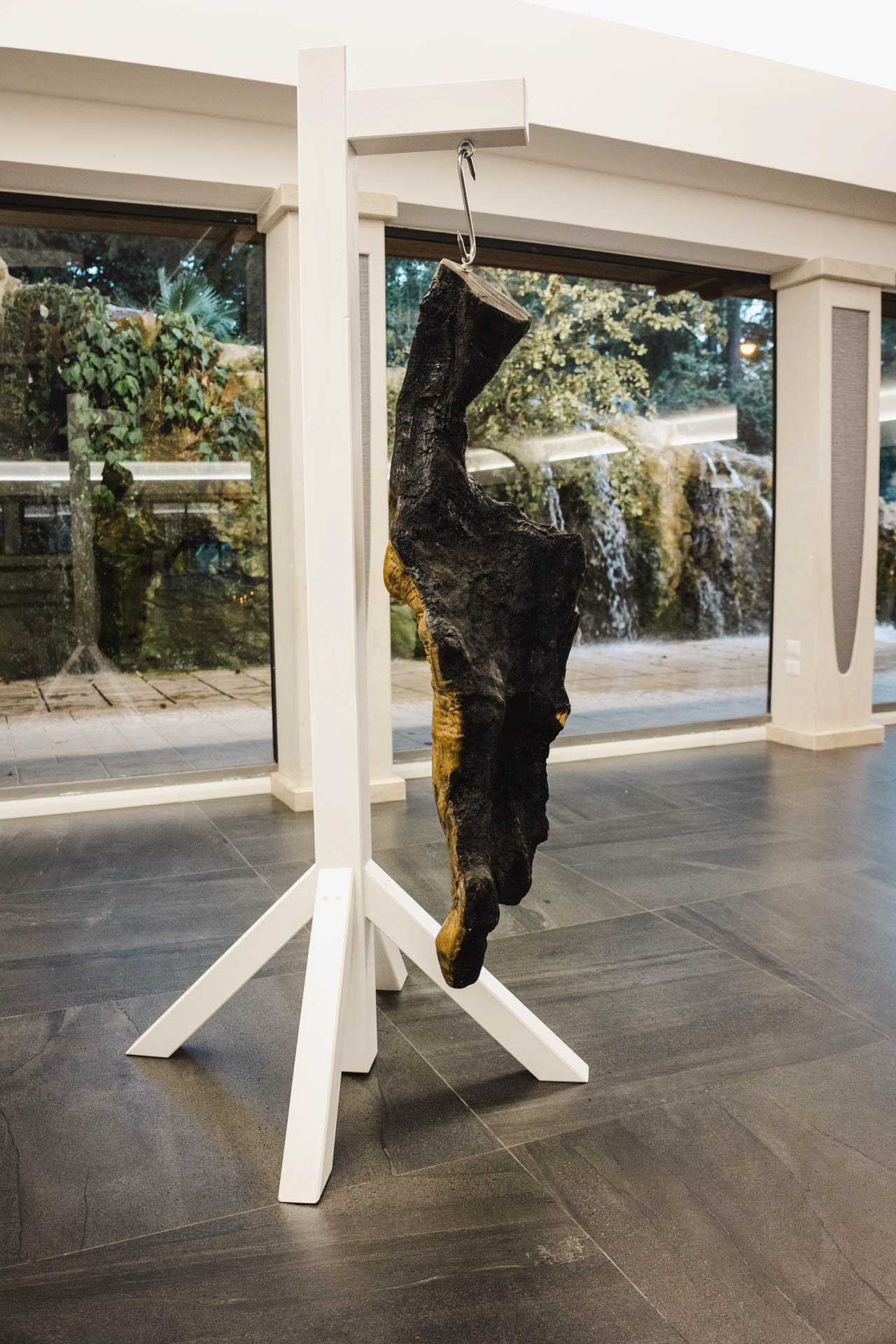
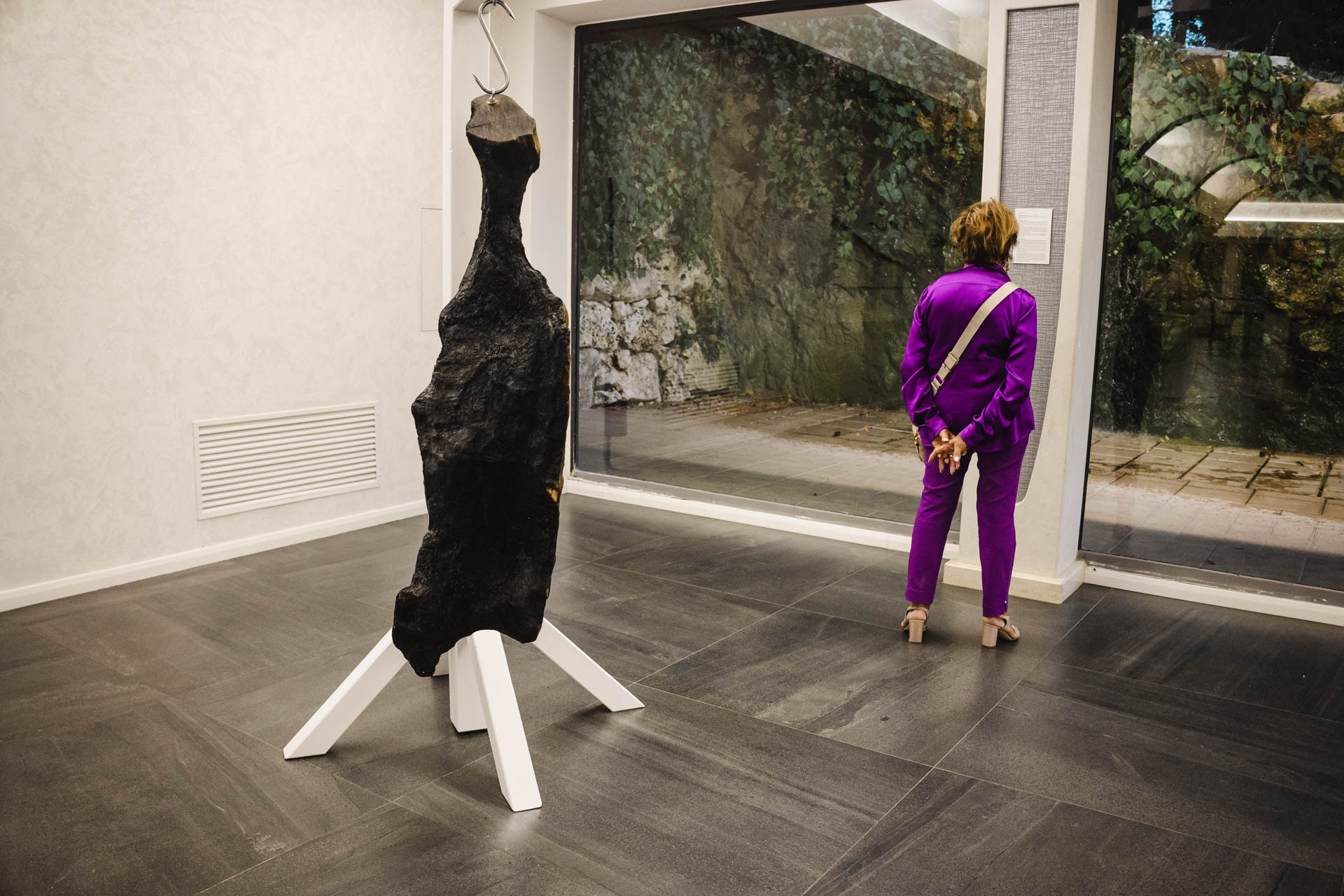
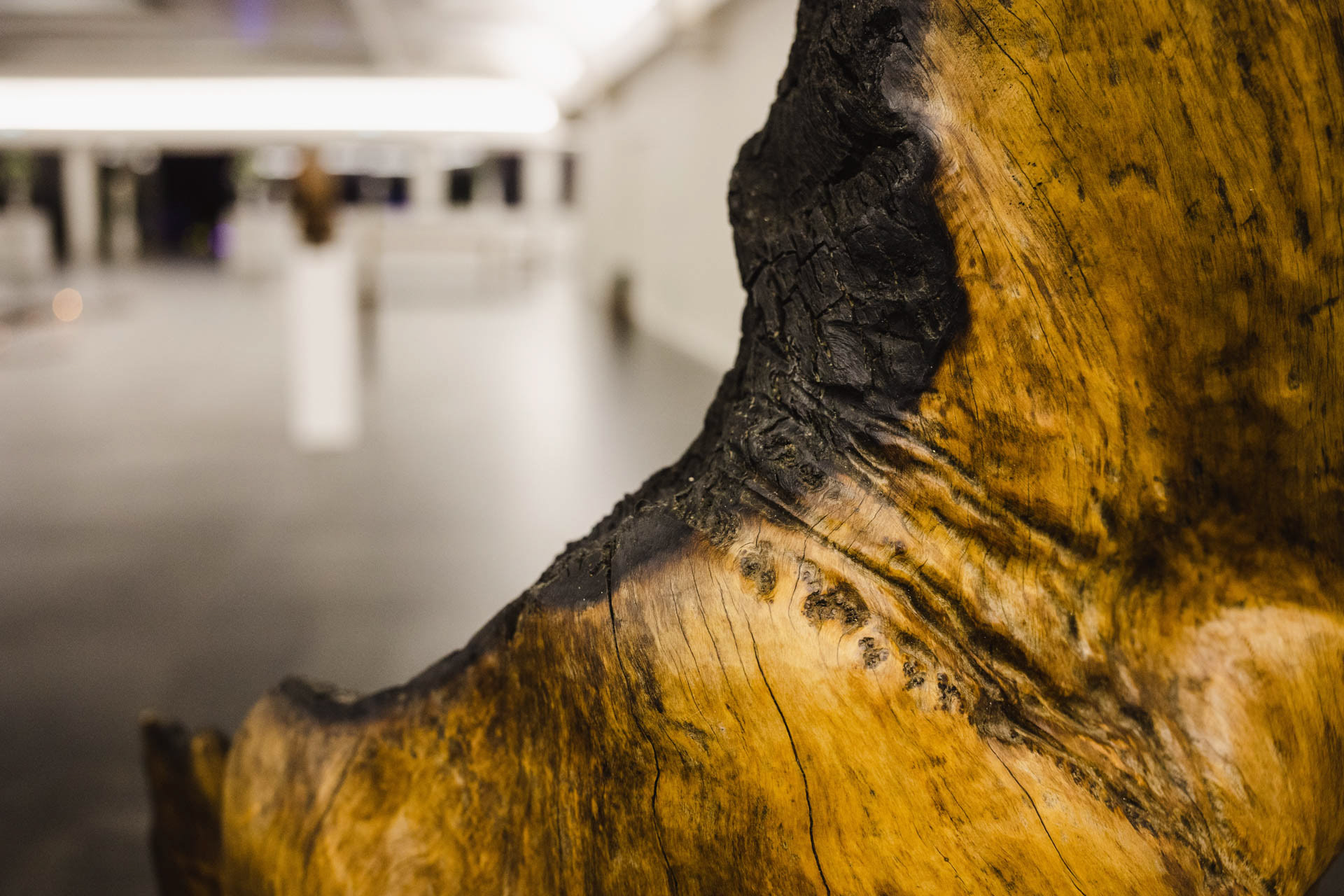
The trunk embodies two opposing conditions: one part is completely charred, while the other remains intact. This division introduces a duality between life and death, memory and oblivion, destruction and the possibility of rebirth. The blackened wood is not merely a trace of fire, but the physical record of an event. The wood retains its scar like a skin.
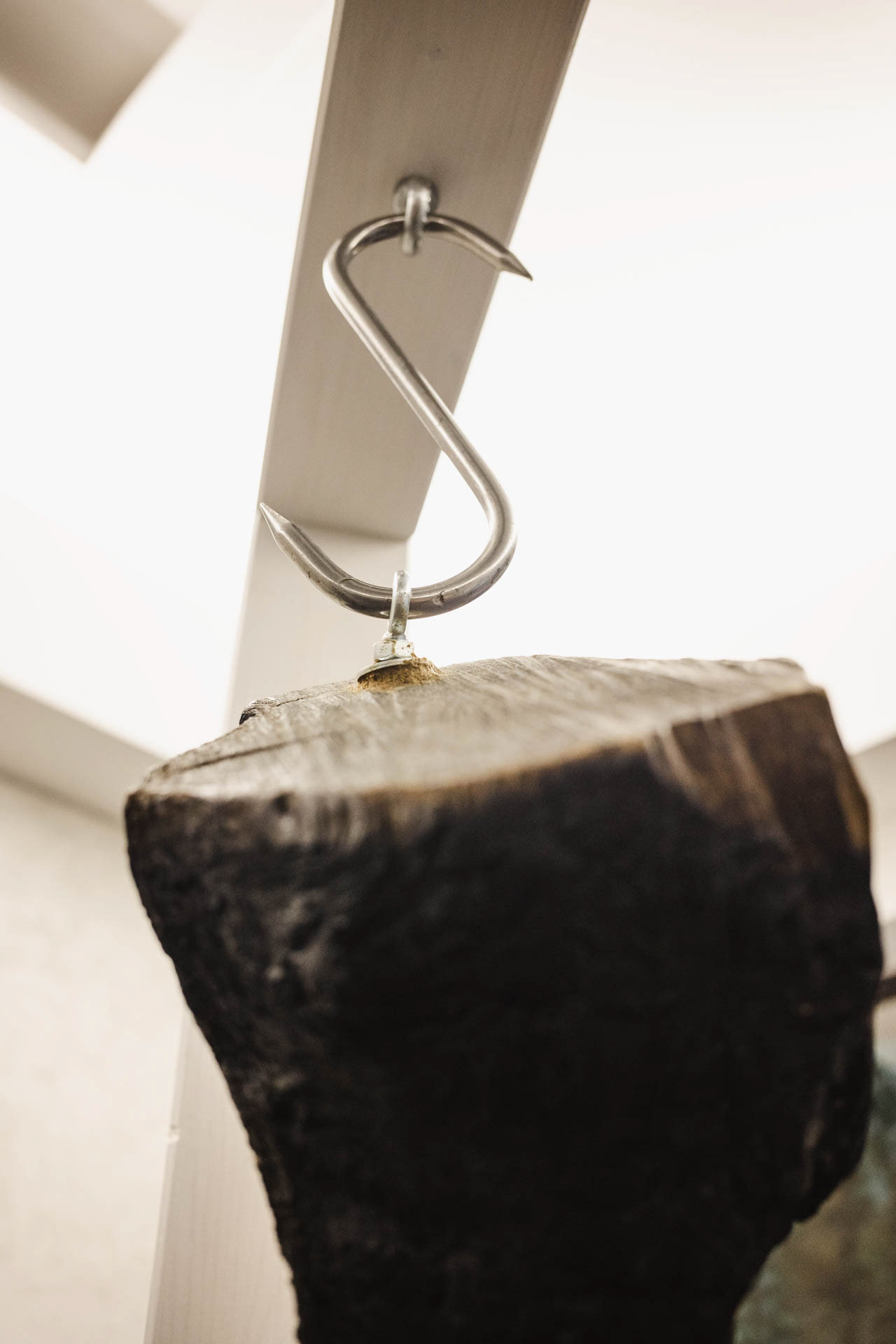
The butcher's hook transforms the trunk into a suspended body and inevitably evokes Chaim Soutine's Carcass of Beef. Soutine painted flesh as a still-pulsating substance; here, flesh is replaced by wood, yet the same idea remains: that of an exposed, vulnerable body, stripped of its original function.
In the Apulian context, this meaning expands further. Olive trees have also become symbols of a collective wound. Fires, the agricultural crisis, the abandonment of rural areas and, above all, Xylella have transformed parts of the landscape, leaving behind dead trees, skeletons and traces of loss. A charred olive tree inevitably carries this imagery, even when its own particular history is different.
The intervention on the tree is minimal. The intact part has been cleaned and smoothed, while the burned section has been left in its original condition. The aim is therefore not to restore the trunk, but to bring what remains into relation with what has been destroyed.
The hook, too, introduces ambiguity. It evokes the slaughterhouse, sacrifice and the carcass, while also recalling the way a tree can be lifted, transported or removed. The trunk thus oscillates between relic, carcass and monument.
The work becomes a portrait of a wounded territory. An olive tree suspended like a body after sacrifice carries within it the memory of the Apulian landscape and, through fire, the memory of something that has been lost yet remains present in the material itself.
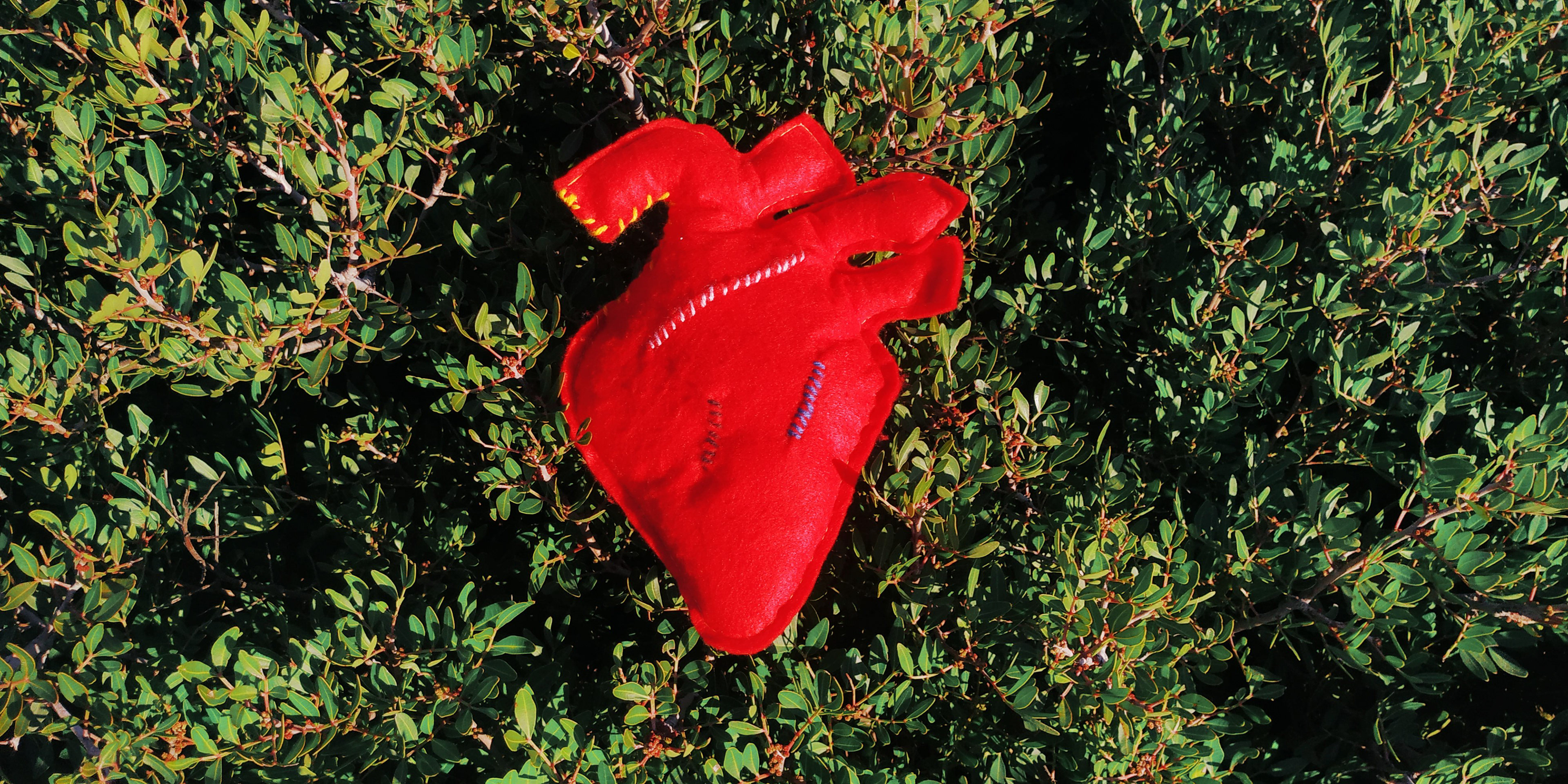
CUORE
An artwork for inner healing
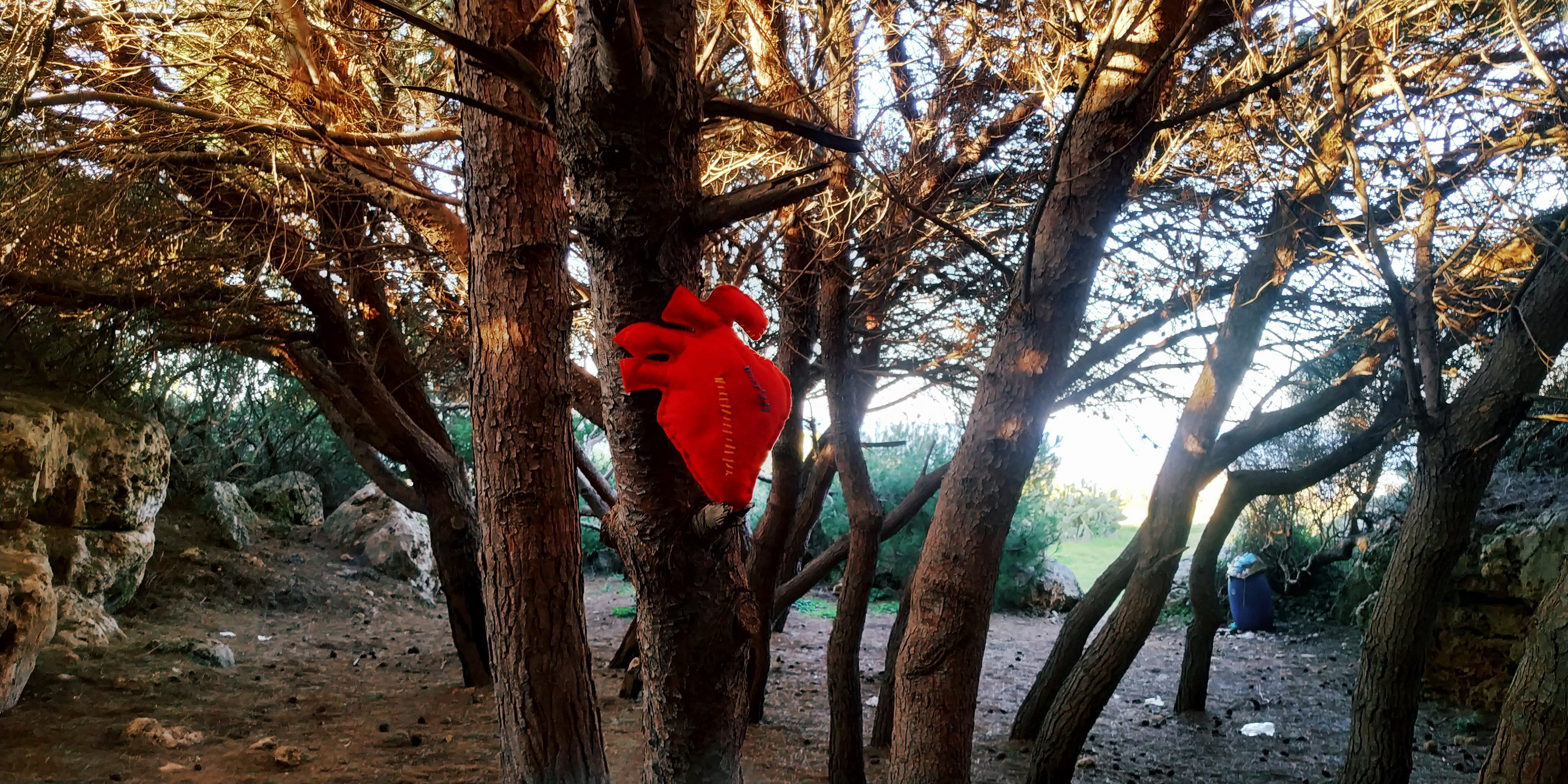
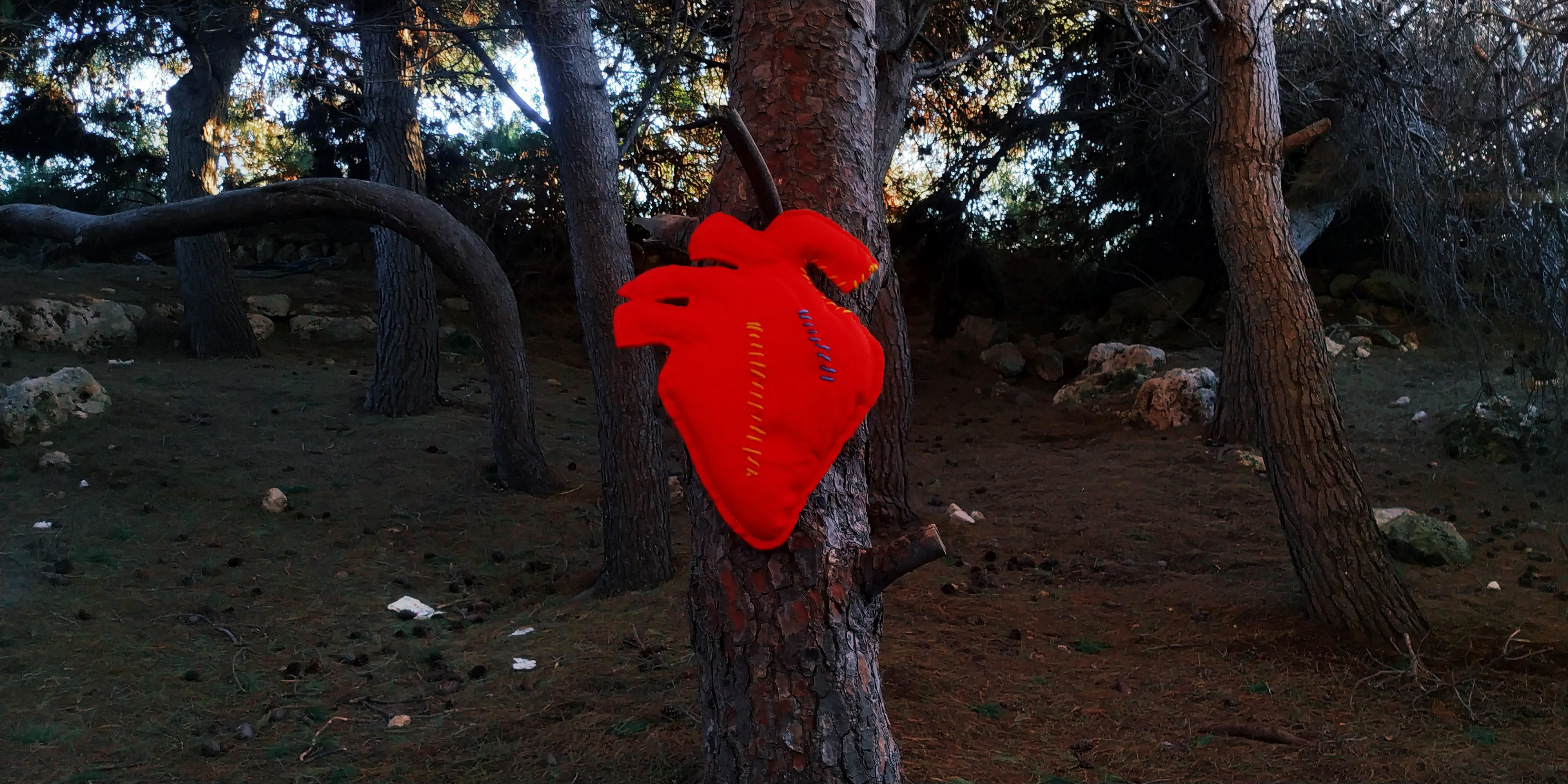
Cuore (Heart) is an artwork conceived as a poetic ritual of inner healing. Each participant receives a heart, a number of wounds chosen by them, coloured threads and a needle with which to stitch the wounds closed.
The act of sewing becomes a metaphor for confronting emotional pain and taking an active role in one's own healing. Each wound represents a personal experience, a memory or a vulnerability that has left its mark. The coloured threads transform the act of repair into a personal gesture of care, acceptance and renewal.
The work invites participants to look inward, acknowledge their wounds and approach them with compassion rather than avoidance. The process is not about erasing the past, but about changing one's relationship with it, recognising that even our most painful experiences can open new paths towards self-understanding.
Through this simple, tangible gesture, Cuore transforms the artistic experience into an intimate act of self-love: an invitation to fall into one's own heart, embrace vulnerability and begin stitching oneself back together, one wound at a time.

MIRRORING
Site-specific installation
Placed in the Apulian countryside, a circular mirror reflects the sky and the earth, bringing them together within a single surface. Clouds, light and landscape converge in a space that appears to unite two distant worlds.
The mirror creates an impossible meeting point: a place where sky and earth touch, yet one that exists only within the reflection. It is a fleeting, imaginary landscape that can never exist outside the mirror itself.
By introducing a reflective surface into the rural environment, the work transforms the familiar landscape into something unfamiliar. The mirror becomes a threshold between reality and illusion, presence and absence, the tangible world and an impossible dimension.
The installation invites us to reconsider our perception of space and the boundaries we take for granted. What we see is real, yet the place in which these elements meet is neither here nor there. It exists for a moment, suspended within the mirror, and will never exist again in quite the same way.


GOD DIRECT-LINE
Installation, 2013
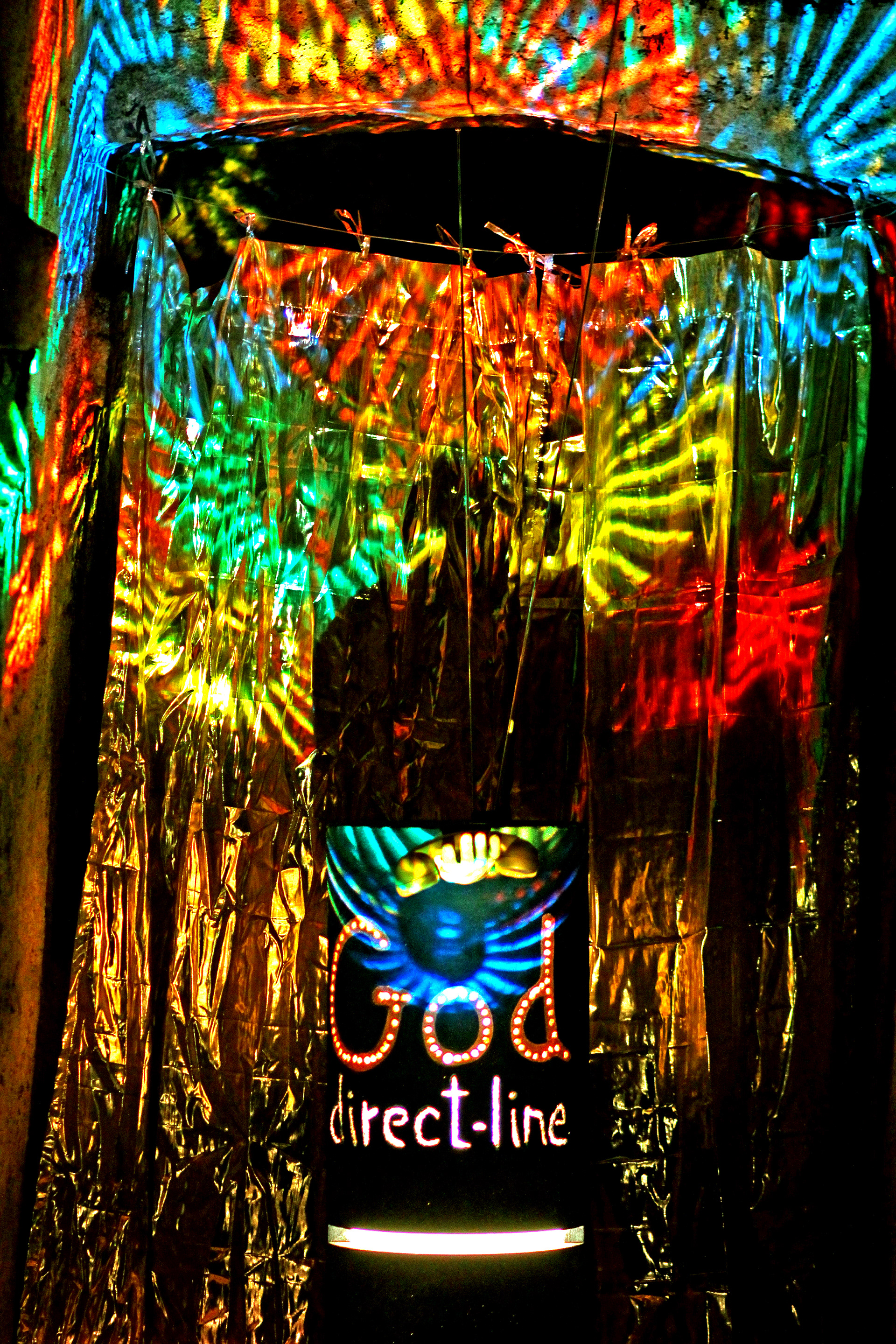
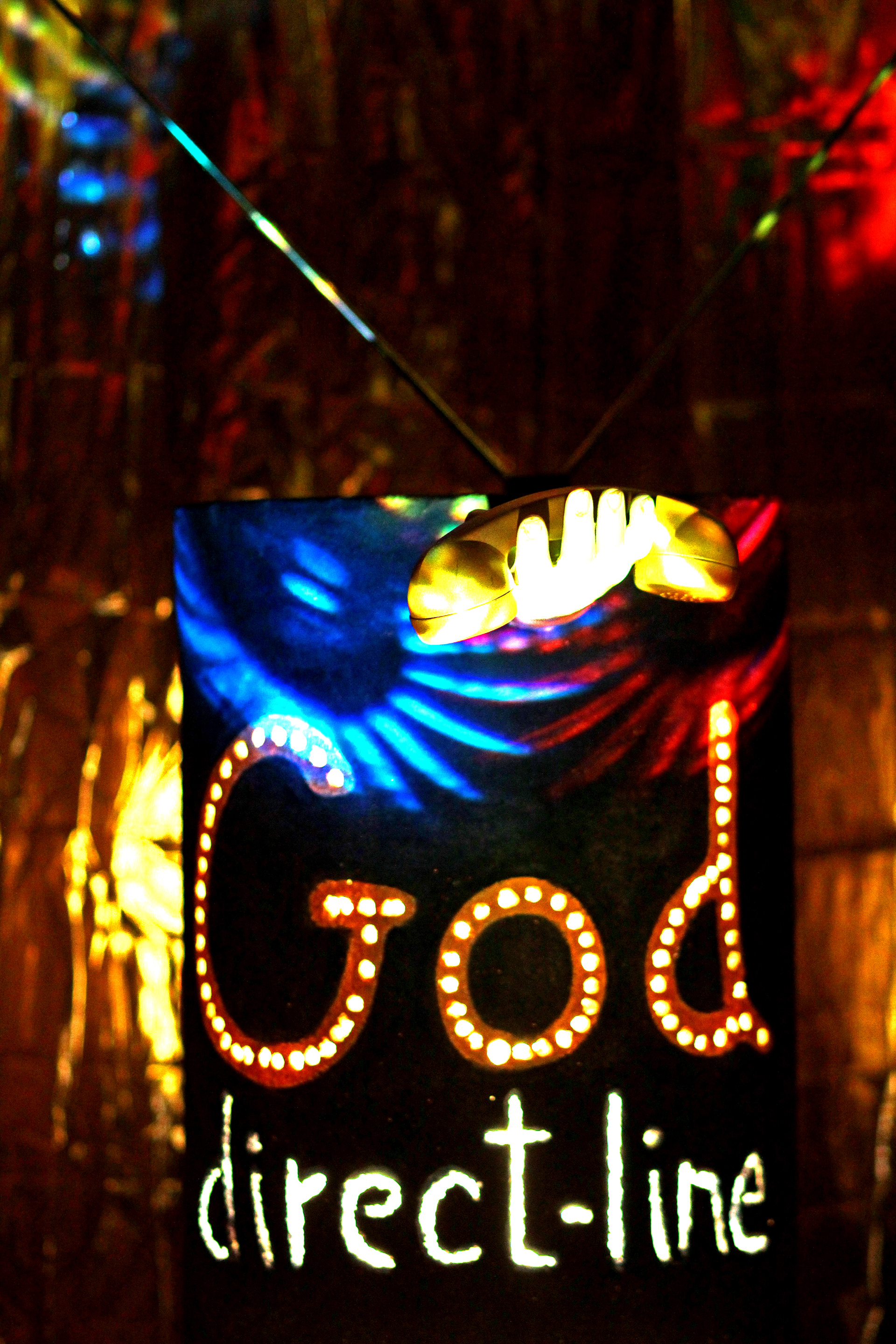
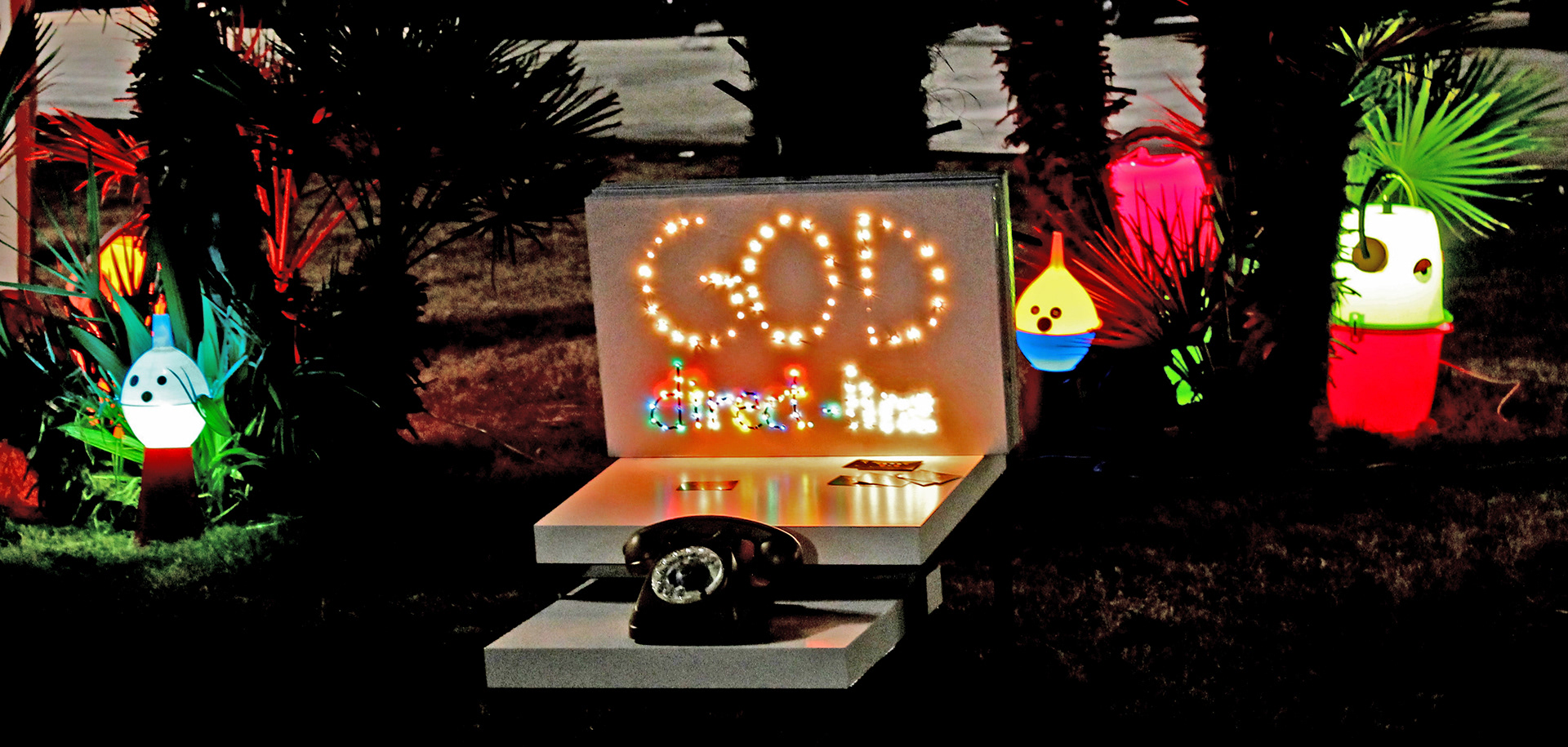
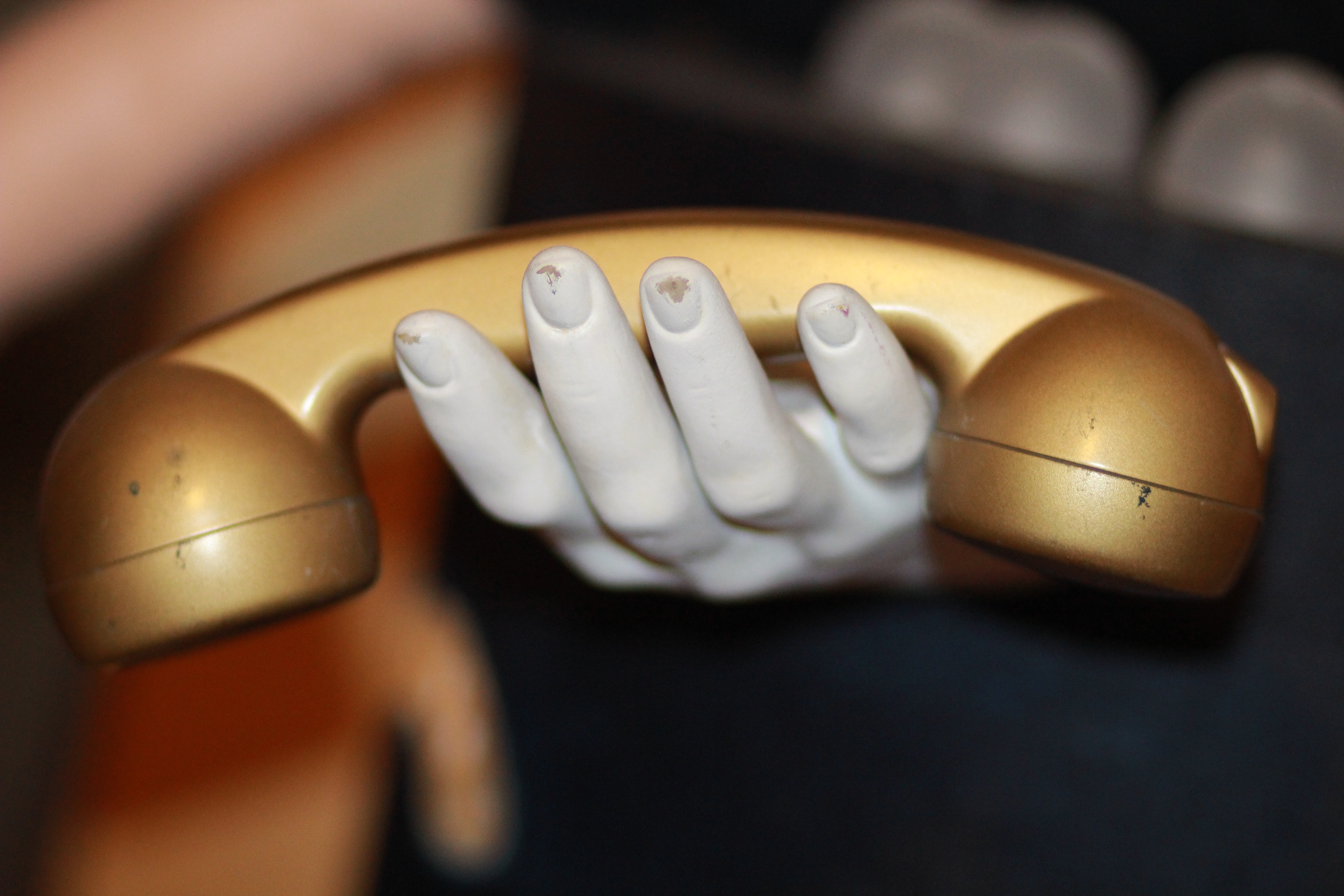
God Direct-Line began in 2013 with a simple intervention in public space. Among six telephone booths, one was missing its telephone. I installed a golden telephone in its place, accompanied by a plexiglass label bearing the words God Direct-Line.
The idea gradually evolved into a sculptural installation featuring a conical base and a hand extending outward, holding a golden telephone receiver: the hand of God.
The work offers the possibility of establishing a direct connection with God, transforming an everyday object into an instrument of spiritual communication. By combining the familiar language of telecommunications with religious imagery, God Direct-Line plays with the idea of a direct line to the divine, as if reaching God were as simple as picking up a telephone.
TIRA PIÙ CHE UN CARRO DI BUOI
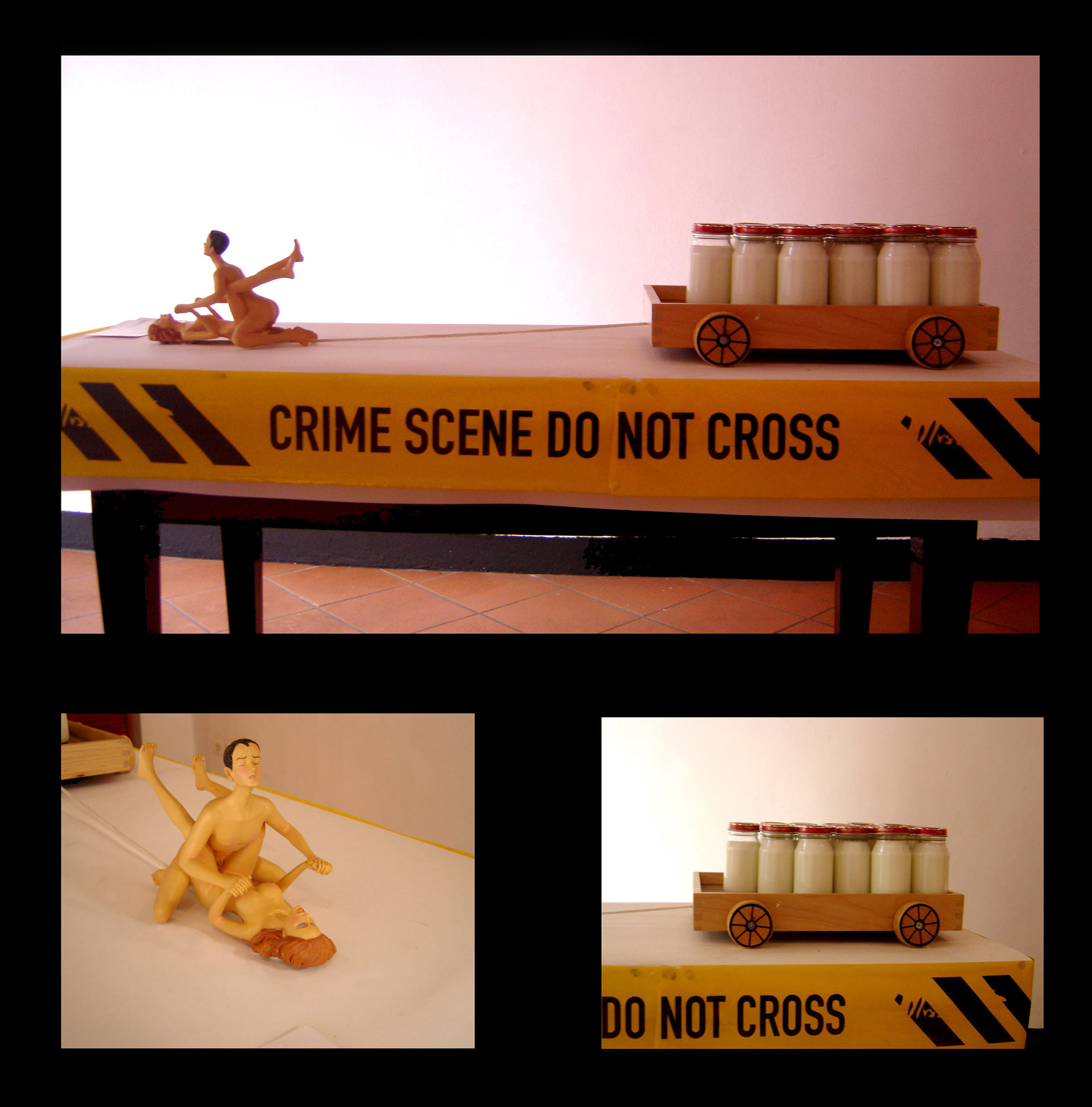
Created during the years of Silvio Berlusconi's political dominance in Italy, Tira più che un carro di buoi is a satirical installation that reflects on the relationship between sex, power and Italian democracy.
A naked sculptural couple, engaged in sexual intercourse in the missionary position, pulls a cart loaded with numerous small bottles of milk. The work transforms the popular Italian saying “Tira più un pelo di fica che un carro di buoi” into a visual metaphor, playing on the idea that sexual attraction can exert more power than any other force.
The installation draws on the political scandals surrounding Berlusconi, particularly those involving prostitution and the intersection of private sexual conduct, public power and political spectacle. Through an intentionally provocative and grotesque image, the work exposes a political landscape in which desire, media sensationalism and personal interests seem to overshadow civic responsibility.
The milk bottles introduce an additional layer of absurdity, contrasting associations of nourishment and innocence with the sexual and political implications of the scene. The result is a deliberately irreverent portrait of Italian democracy, where the mechanisms of power appear to be pulled forward by forces far removed from the ideals they claim to represent.