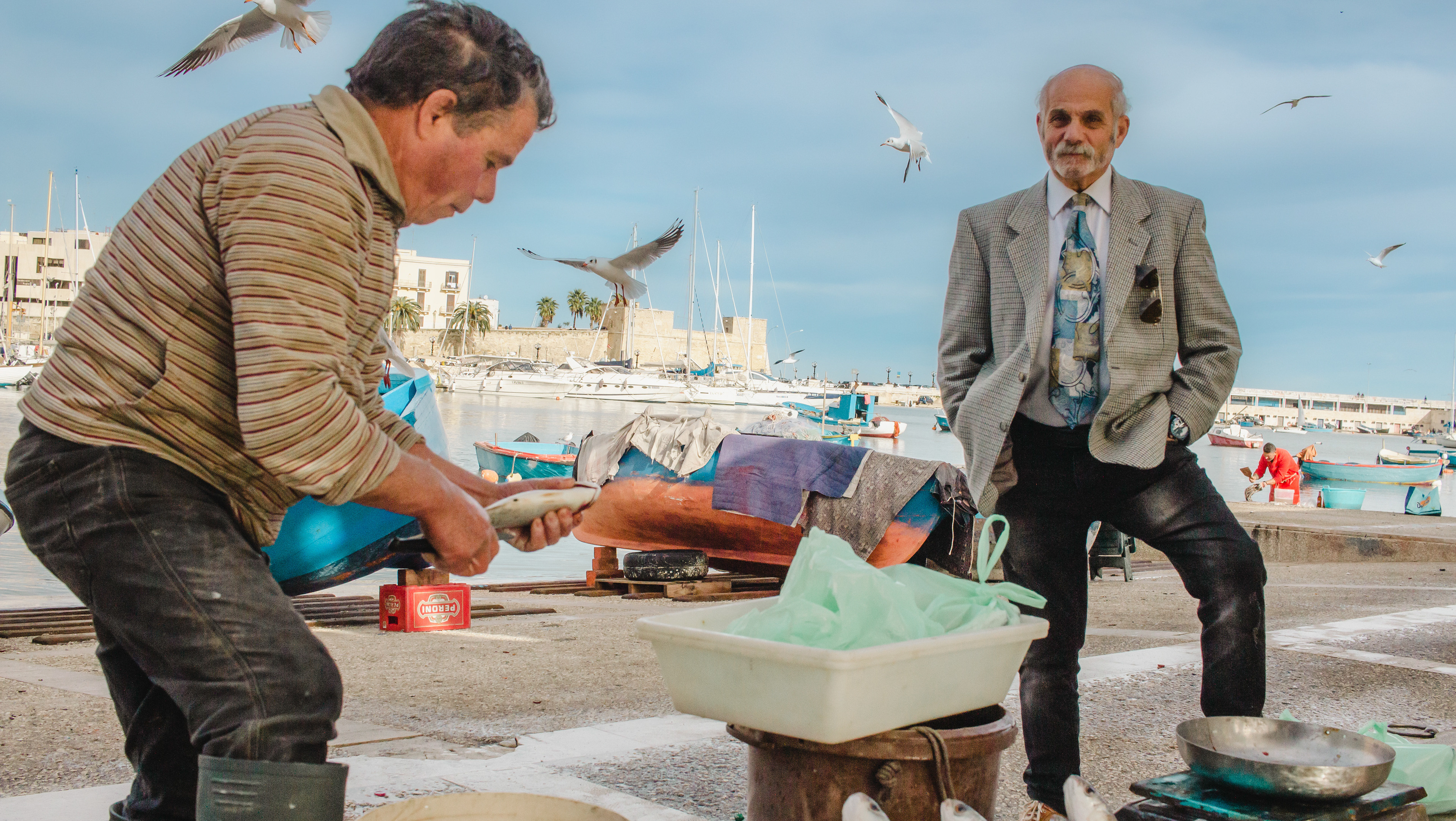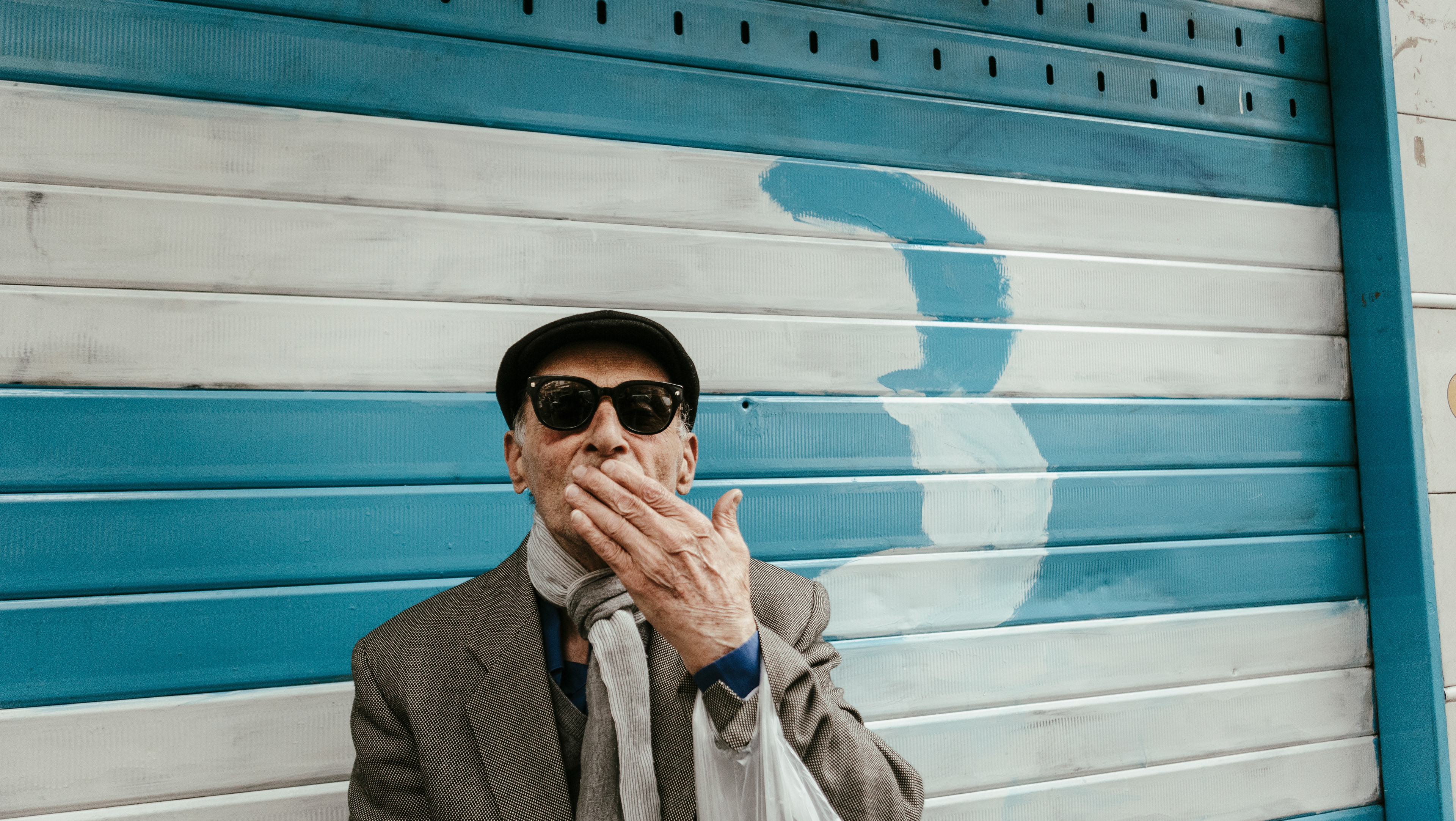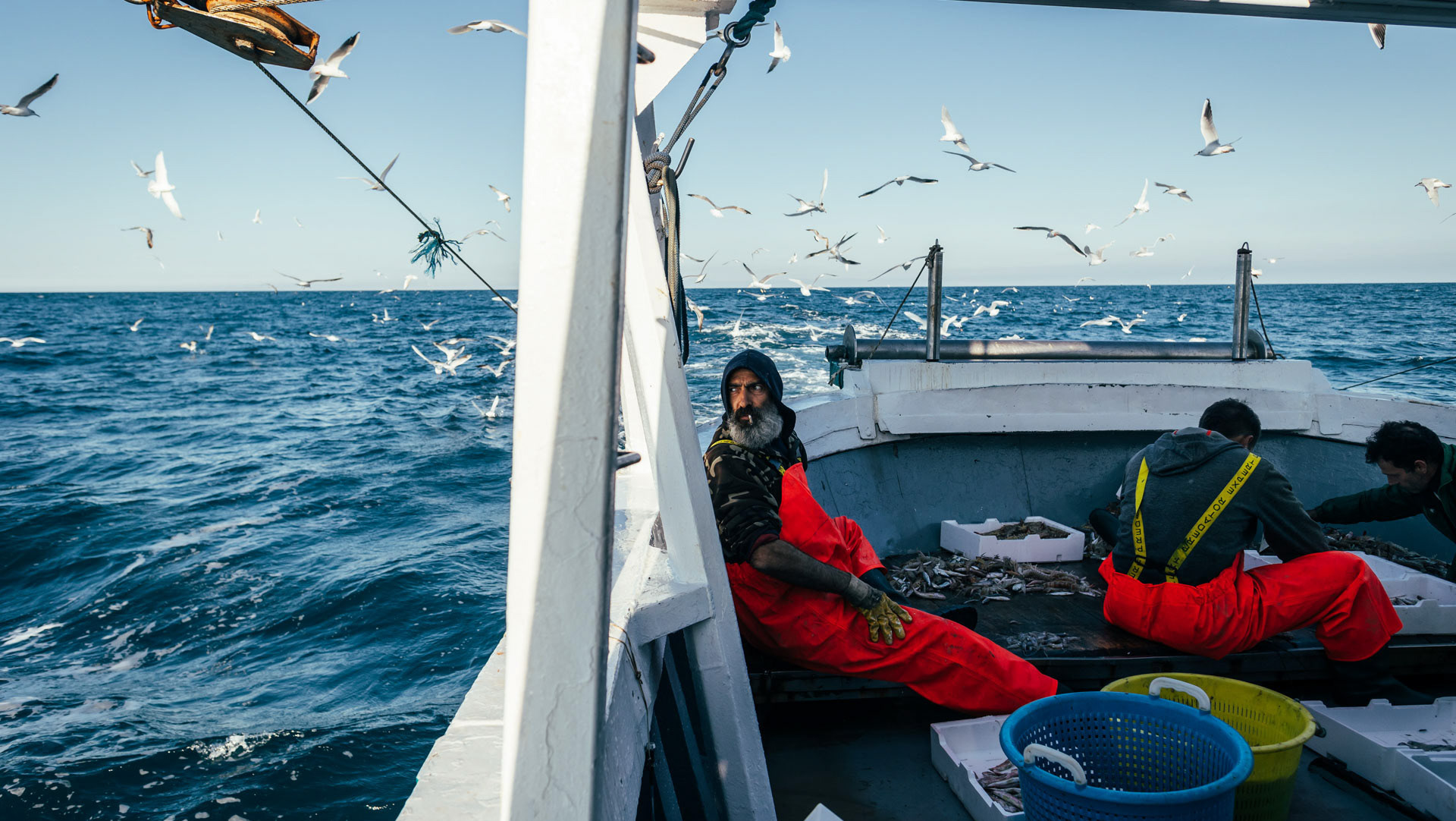
This long-term reportage explores the lives of the fishermen of Mola di Bari, my hometown, documenting a profession and a cultural identity that are progressively disappearing.
Through their weathered hands, salt-marked skin, and faces shaped by time, the images reveal a life defined by physical endurance, inherited knowledge, and an unwavering bond with the sea. Since 2022, I have worked closely alongside the fishermen, spending extended periods immersed in their daily routines. Access to their boats—considered more a home than a workplace—was granted only after years of trust and mutual respect.
This proximity allowed me to witness not only the demanding physical labor of bottom trawling and net mending, but also moments of solitude, camaraderie, and silent resilience that define their existence. Fishing in Mola di Bari is no longer sustainable as it once was.
Economic pressures, environmental change, and increasingly restrictive regulations are accelerating the decline of a profession that younger generations are unwilling—or unable—to continue. As this livelihood fades, so too does a fundamental part of the town’s social fabric.
This work is part of a broader investigation into the transformation of my hometown over the last two decades. Beyond documenting labor, the project reflects on the disappearance of manual work and the shift from a culture of “doing” to one increasingly detached from physical craft. The fishermen’s lives embody a fragile balance between survival, dignity, and adaptation.
Ultimately, this reportage is both a document and a testimony: an attempt to preserve the memory of a community whose knowledge, rituals, and relationship with the sea risk being lost within a single generation.